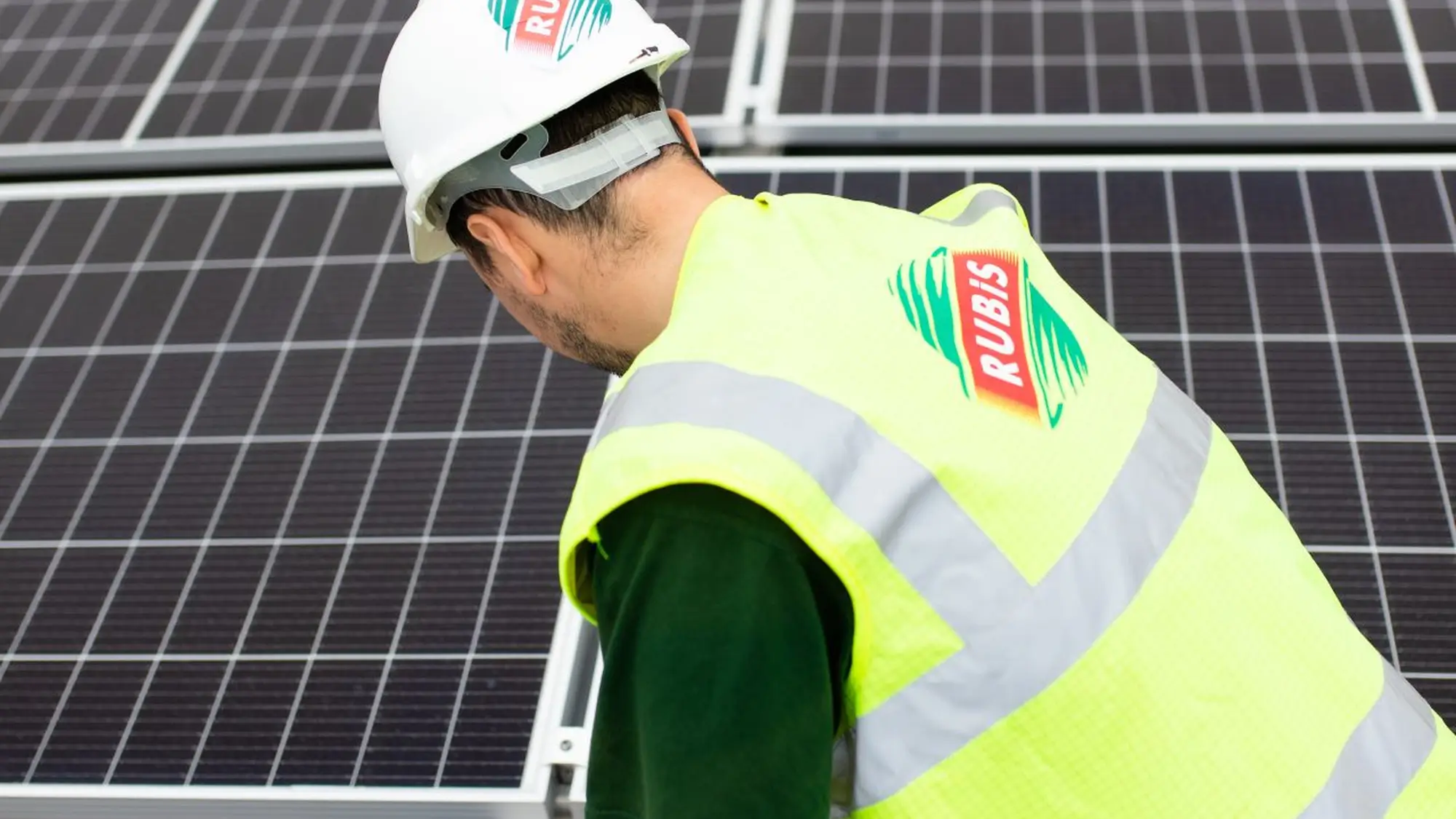

Reduce the carbon footprint of our operations

Further develop our low-carbon activities
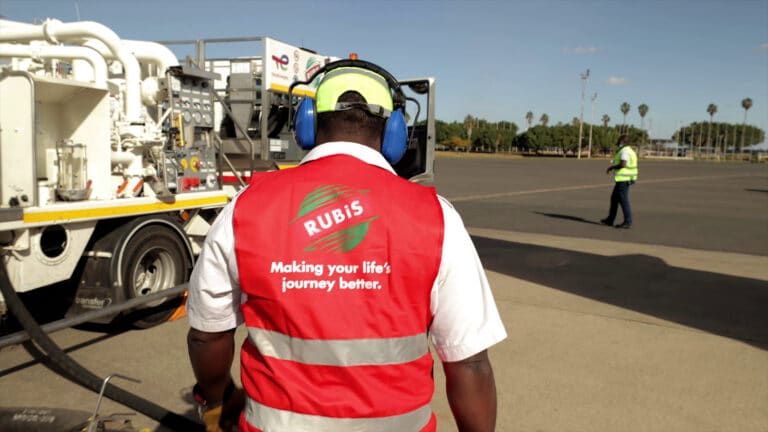


What we stand for
In a context of climate change, demand for lower-carbon energy and modes of transport is intensifying.
To continue meeting the needs of the regions where we operate, we are adapting to the challenges of the transition. Our climate strategy reflects our ability to support energy transitions, combining the resilience of our business model with that of the regions we serve.
We are working to decarbonise our own operations and our logistics chain. To this end, we have set a target for 2030 of an absolute reduction in our greenhouse gas emissions — a commitment made all the more demanding by our growth ambitions.
Reduce our scope 1 & 2 emissions by 20% by 2030 compared with 2019
Reduce the energy consumption of our facilities
Adapt our shipping operations
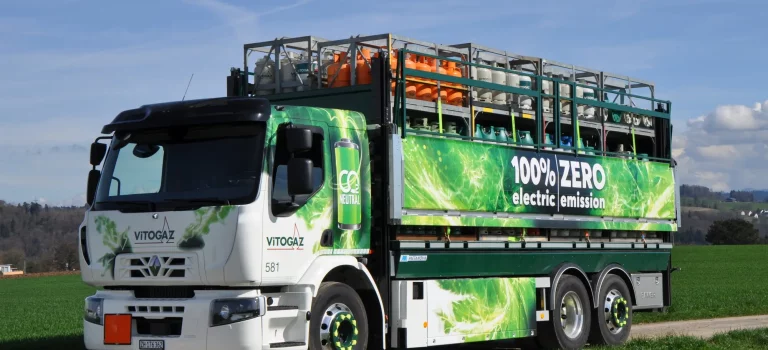
Decarbonise our storage and distribution operations
Reduce emissions from our outsourced transport (targeted scope 3A*) by 20% by 2030 compared with 2019
*emissions from outsourced transport (land and sea), upstream electricity and business travel of Rubis Énergie, representing more than 50% of Rubis Énergie’s scope 3A emissions (2019 baseline).
Reduce emissions from our land logistics
Support the decarbonisation of our shipping providers
Disclaimer: the greenhouse gas emission reduction targets set for scopes 1 and 2 are based on the data, methodologies and assumptions available to date, in particular the 2019 baseline year and the decarbonisation levers identified by Rubis (biofuels, energy efficiency, electrification, etc.). These projections reflect the current state of technologies and markets, and take into account the operating conditions known at the time they were drawn up. Given the uncertainty inherent in future regulatory, technological and economic developments, as well as possible changes in scope or activity, the actual achievement of these targets may differ from the anticipated trajectories. Estimates and the implementation of action plans are reviewed regularly to reflect these developments.
We are broadening our energy offering by developing more sustainable alternatives to conventional fuels. Our low-carbon activities, biofuels and photovoltaic electricity generation, support our customers’ decarbonisation.
Grow our Photovoltaic Electricity Production activity
Support our customers in their energy transition
Rubis Energy Kenya has demonstrated our ability to balance business growth with reducing our carbon footprint, cutting emissions from fuel transport by almost half whilst distributing almost double the volume of energy products.
Logistics operations have become more efficient and more energy-efficient through targeted actions such as route optimisation, improved truck loading rates and the gradual phase-out of small-capacity vehicles.
Preserve the environment across our operations
Be a trusted partner in the communities we serve
Rubis Energie, a subsidiary of the French Rubis Group, brings together its energy and bitumen distribution activities, primarily across Europe, Africa and the Caribbean.
Tour Landscape
6 Place des Degrés 92800 Puteaux, FRANCE
Tél. +33 1 49 01 10 10
Present across multiple countries and deeply rooted in our local markets, we share a common entrepreneurial mindset built on initiative, accountability and teamwork.
Information available as at : 15/10/2026
This Policy describes how personal data are processed when the website www.rubisenergie.com (the “Website”) is used. It applies to browsing, internal searches, audience measurement and job applications submitted via the Website.
The data controller and publisher of the Website is:
Rubis Énergie
Tour Landscape – 6 place des Degrés
92800 Puteaux – France
Nanterre Trade and Companies
Register No. 552 048 811
Intra-Community VAT No.: FR67 552 048 811
Rubis Énergie determines the purposes and means of the processing carried out on the Website. Rubis SCA may be consulted in its capacity as the holding company, but is not the data controller for the Website.
Requests relating to data protection may be sent to dpo@rubisenergie.com.
Requests may also be sent by post to: Rubis Énergie – Legal Department / Data Protection, Tour Landscape, 6 place des Degrés, 92045 Paris La Défense Cedex, France.
Depending on the features used, the following categories of data may be processed:
The Website currently has neither a general contact form nor customer accounts. It includes an application process linked to published vacancies and allows applications to be sent to recrutement@rubisenergie.com.
Technical data and logs are processed to ensure the operation, security, integrity and availability of the Website, prevent misuse and diagnose errors. This processing is based on the data controller’s legitimate interests.
Maximum retention period: 12 months
Search terms are processed to provide the results requested by the user and improve the relevance of the search engine. This processing is based on the legitimate interest in ensuring the proper operation of the Website.
The Website uses Matomo to measure Website traffic and usage. Matomo is configured in consent-exempt mode and IP addresses are anonymised.
Retention period for audience measurement data: 13 months.
Candidates may apply for a vacancy published on the Website or send their CV and cover letter to recrutement@rubisenergie.com. Applications are received in a Microsoft 365 mailbox and used to assess the application, communicate with the candidate and conduct the recruitment process.
Retention period: 8 months.
Data provided in connection with a request to exercise data subject rights are processed to verify and respond to the request and to retain evidence of how it was handled.
Retention period: 12 months.
Job application data are provided directly by candidates. Technical, audience measurement and consent data are generated when the Website is used.
Information required to process an application must be provided so that the application can be assessed. If this information is not provided, Rubis Énergie may be unable to proceed with the application. Candidates may decide whether to provide optional information.
Within the limits of their responsibilities and on a need-to-know basis, the data may be accessible to:
The Website is hosted by Infomaniak Network SA in Switzerland. Switzerland benefits from an adequacy decision issued by the European Commission.
The Microsoft 365 mailbox used for recruitment is hosted in data centres located in Ireland.
The Website uses Complianz to collect and manage users’ choices. The categories currently configured are: functional, preferences, statistics and marketing.
Trackers that are strictly necessary for the operation of the Website may be used without consent where they meet the applicable legal requirements. Matomo is configured in accordance with the consent exemption regime, with IP address anonymisation.
Users may accept, reject or customise their choices and may subsequently change them using the “Manage consent” button.
Inventory of cookies known as at the date of this Policy (Matomo cookie suffixes may vary depending on the domain and Website ID):
The data controller implements appropriate technical and organisational measures to protect data against destruction, loss, alteration, unauthorised disclosure or unauthorised access.
Rubis Énergie restricts access to data to authorised persons according to their duties. Detailed technical measures and an internal data breach management procedure must be formalised and documented by the relevant teams.
Depending on the processing concerned and subject to the conditions laid down by applicable law, every individual has the following rights:
Requests may be sent to dpo@rubisenergie.com or by post to the address given in Section 1. The email address must be operational before this Policy is published.
Rubis Énergie may request additional information necessary to confirm the identity of the person making the request where it has reasonable doubts. A copy of an identity document will be requested only where necessary and proportionate. Rubis Énergie will normally respond within one month. This period may be extended by a further two months where the request is complex or numerous, after the data subject has been informed.
Any person who believes that their rights have not been respected may lodge a complaint with the French Data Protection Authority (Commission nationale de l’informatique et des libertés – CNIL):
CNIL – Complaints Department
3 place de Fontenoy – TSA
80715
75334 Paris Cedex 07
The Website runs on WordPress and is hosted by:
Infomaniak Network SA
26 avenue de la Praille
1227 Carouge / Geneva – Switzerland
This Policy may be amended to reflect legal, regulatory, technical or organisational developments. The version published on the Website states the date on which it was last updated.
Dernière mise à jour : 02 septembre 2026
Website publisher:
Rubis Énergie
Tour Landscape – 6 place des Degrés
92800 Puteaux – France
RCS Nanterre 552 048 811
Intra-Community VAT: FR67 552 048 811
Publication Director: Monsieur Jean Christian BERGERON
Website design:
BEAPI – https://beapi.fr/
16 rue Martel 75010 Paris – France
Website hosting:
INFOMANIAK NETWORK SA
26, Avenue de la Praille – 1227 Carouge / Genève – SUISSE
The purpose of the website rubisenergie.com is to provide any interested party (hereinafter the “user”) with information regarding the activities and results of the Company, as well as those of the companies it controls, directly or indirectly, within the meaning of French legislation. The website—including these legal notices—may be updated at any time.
The information and documents available on the website (including text, images, photographs, videos, audio, databases, company names, logos, products, and brands mentioned) are either the exclusive property of the Company or one of the companies it controls, or are subject to rights of use, reproduction, and representation, or to copyrights. Any reproduction, representation, or use without the express authorization of the Company is prohibited.
Copyright for images featured on the website:
© Gilles Dacquin
© Franck Dunouau
© Rubis Group Photo Library
Users may access information available on the website via an RSS feed. The Company grants this right for individual, non-commercial use only, provided that the website’s URL is clearly cited.
Rubis may collect your personal data in order to respond to a request from you. Such data is processed by Rubis or, where applicable, by a service provider contractually obligated to ensure its confidentiality and security, and to use it solely for the purposes of the task for which they have been engaged. Rubis undertakes not to sell, rent, or transfer this data to third parties.
In accordance with applicable regulations, you have the right to access, rectify, delete, and object to the processing of your personal data.
To provide you with a better service, Rubis compiles statistics and audience measurements for the website. To facilitate this statistical analysis, the website provider uses the services of etracker GmbH, which involves the use of cookies (small text files stored by your internet browser on your device). Data generated via etracker GmbH is processed and stored exclusively by etracker GmbH. This data is processed in compliance with Article 6 of the General Data Protection Regulation (GDPR).
Please be advised that you may object to the storage of these cookies. However, choosing not to install cookies may limit certain features of the website. Information on how to configure your browser settings can be found at the following address: https://www.cnil.fr/fr/cookies-les-outils-pour-les-maitriser.
The Company disclaims all liability:
in the event of any imprecision, inaccuracy, or omission regarding information or documents available on the website, including any digital connections (hyperlinks, etc.) used by or referenced on the website;
in the event of any damage—whether direct or indirect, and regardless of its cause, origin, nature, or consequences—arising from access to the website (or the inability to access it), the use of the website, or reliance placed upon any information or document obtained directly or indirectly from the website (such information or documents shall in no way constitute an inducement to invest, a form of solicitation, or a public offering of financial instruments).
Se désabonner
Inscrivez-vous pour recevoir un email
dès publication d’une nouvelle information
sur notre société
Si vous ne souhaitez plus recevoir nos communiqués de presse, vous pouvez vous désabonner à tout moment en écrivant à : investors@rubis.fr.